Our 24/7 Ambulance Fleet, with Regional Coverage
800+
Ambulances
Distributed throughout East Africa
300+
Advanced Life Support Ambulances
Trained and equipped to provide advanced care onboard.
60+
Mobile Labour Units
Specialized advanced maternity care teams with maternity-equipped mobile care ambulances.
Rescue.co operates East Africa's largest and most strategically distributed ambulance fleet with over 800 response teams and vehicles positioned throughout the region. Our comprehensive fleet delivers the fastest response times, advanced medical capabilities, and 24/7/365 coverage across urban, rural, and remote areas.
Unmatched Scale and Strategic Distribution
800+ Response Teams and Vehicles strategically positioned based on sophisticated demand modeling, population density analysis, and historical call patterns:
- Urban Centers: Multiple units per district in major cities with average response times under 10 minutes
- Suburban Corridors: Strategic positioning with 12-18 minute average response capability
- Highway Networks: Coverage along major transport routes with accident response optimization
- Rural and Remote Areas: Forward-positioned units ensuring 25-35 minute response in underserved populations
- Tourist and Safari Regions: Dedicated coverage near national parks, wildlife reserves, and popular destinations
- Border Crossings: Units positioned at international borders for cross-border medical emergencies
Fastest Response Times in East Africa
Urban Emergency Response: 8-12 minutes average from call to on-scene arrival, with sub-8-minute response for critical cardiac and trauma emergencies
Suburban and Peri-Urban: 12-18 minutes average for communities surrounding major cities with highway access for rapid deployment
Highway and Inter-City Routes: 15-25 minutes along major highways with mobile positioning during peak travel times
Rural and Regional Centers: 20-35 minutes from regional bases with air ambulance coordination for critical cases requiring faster transport
Diverse Specialized Fleet
Type I Emergency Ambulances (350+ units):Urban rapid response vehicles with full Advanced Life Support configuration, optimal maneuverability in congested environments, primary 911-equivalent emergency response.
Type III Critical Care Units (200+ units):Expanded patient compartments for ICU-level patients requiring mechanical ventilation, advanced monitoring, multiple IV pumps, and complex interventions during extended transport.
Bariatric Transport Units (40+ units):Specialized high-capacity ambulances with reinforced chassis rated for up to 850 pounds, hydraulic lift systems, wider compartments, and heavy-duty equipment.
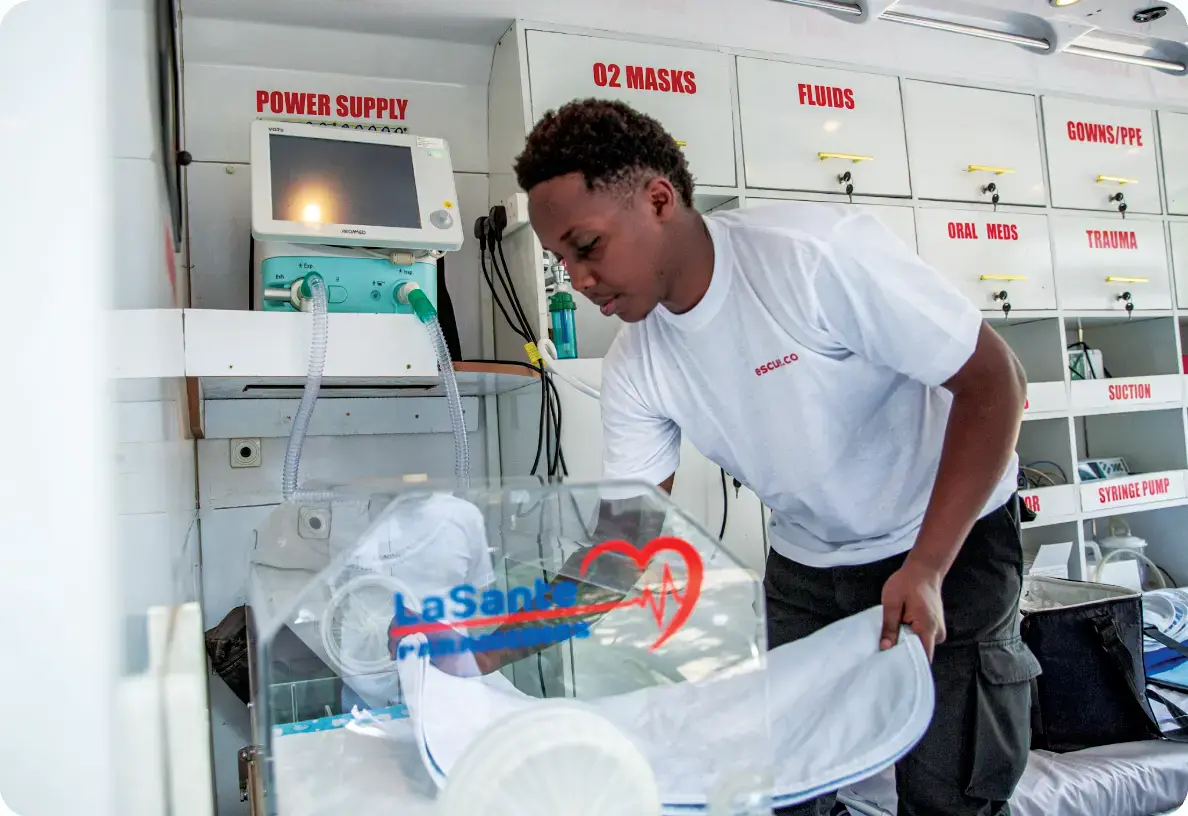
Neonatal and Pediatric Transport Units (35+ units):Transport incubators with temperature and humidity control, pediatric ventilators, specialized monitoring, and crews with Neonatal Resuscitation Program and Pediatric Advanced Life Support certification.
Mobile Labour Units (30+ units):Purpose-built maternity vehicles with obstetric monitoring including fetal heart rate tracking, emergency delivery kits, neonatal resuscitation equipment, and specialized obstetric emergency-trained crews.
4x4 Off-Road Response Units (80+ units):All-terrain capability for safari areas, rural regions, and poor road conditions with raised ground clearance, four-wheel drive, and full medical equipment despite rugged platform.
Motorcycle Response Units (45+ units):Paramedic-operated motorcycles carrying essential life-saving equipment, navigating through traffic to provide immediate advanced life support while ambulances en route.
Incident Command and Mass Casualty Units (12 units):Mobile command centers with communication equipment, mass casualty supplies, triage capabilities, and coordination systems for large-scale emergencies and disasters.
Standby and Event Medical Units (60+ units):Dedicated coverage for concerts, sporting events, marathons, VIP events, and special occasions without impacting emergency response capacity.
Hospital-Grade Medical Equipment
Every vehicle equipped with advanced medical technology:
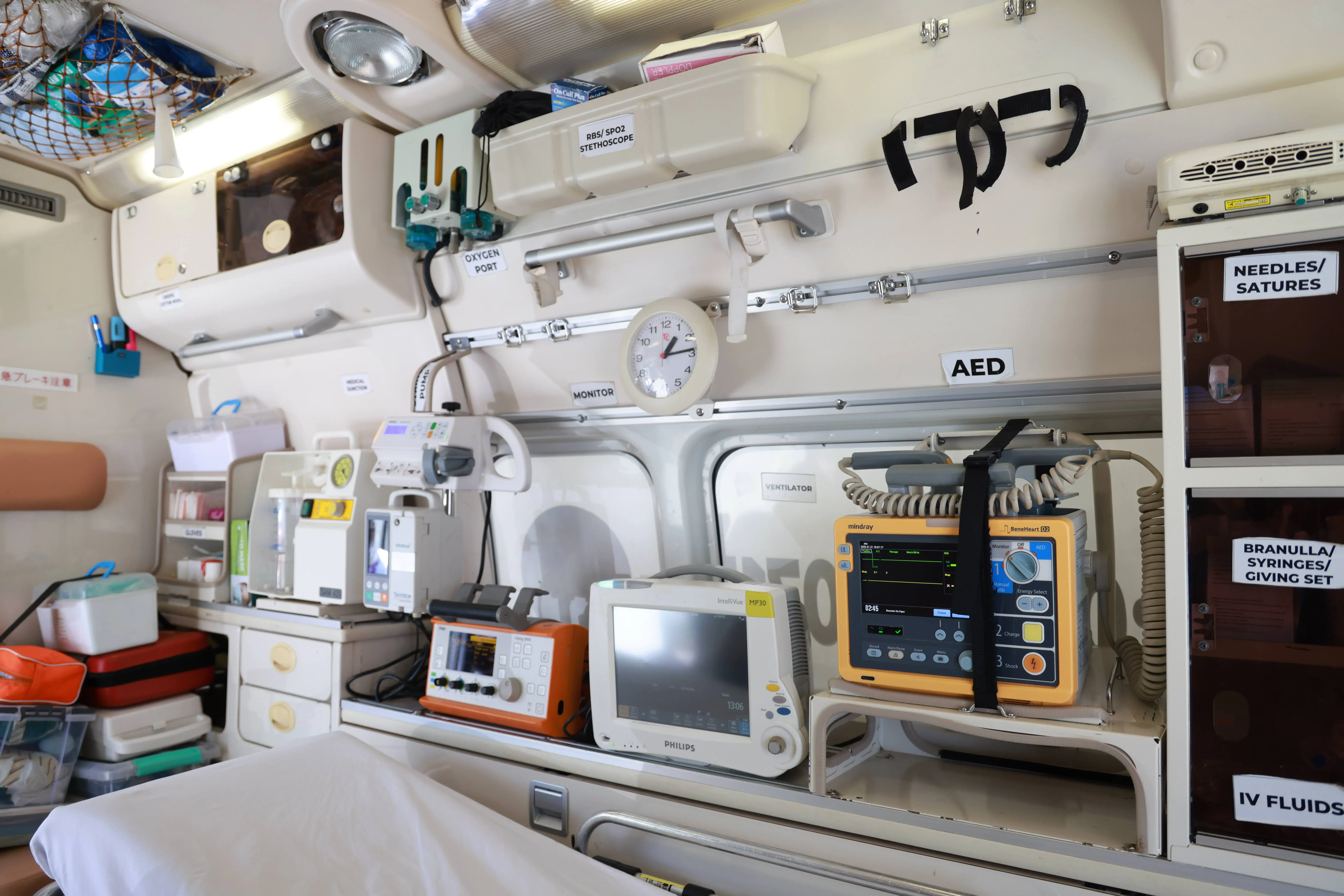
- Cardiac monitors with 12-lead ECG capability and defibrillation
- Advanced airway management including video laryngoscopy and mechanical ventilators
- Multiple IV infusion pumps with comprehensive medication formularies
- Point-of-care diagnostics and portable ultrasound on critical care units
- Spinal immobilization and comprehensive trauma management supplies
- Climate-controlled patient compartments with infection control systems
- Electronic patient care reporting with hospital integration
- Real-time GPS tracking and communication systems
Professional Medical Teams
Rigorous Qualifications:
- Licensed Paramedics and Emergency Medical Technicians with current certifications
- Advanced Cardiac Life Support (ACLS), Pediatric Advanced Life Support (PALS), and Pre-Hospital Trauma Life Support (PHTLS) certifications
- Critical Care Paramedic credentials for specialized transport teams
- Flight Paramedic certification for air medical coordination
- Specialized obstetric training for Mobile Labour Unit crews
Continuous Training and Development:
- Quarterly continuing education updating teams on latest protocols
- Monthly skills labs practicing critical procedures
- High-fidelity simulation training creating realistic emergency scenarios
- Case review sessions analyzing responses for continuous improvement
- Real-time protocol access via mobile devices ensuring current guidelines
Comprehensive Maintenance Programs
Daily Pre-Shift Inspections:Complete vehicle and equipment checks before every shift including lights, sirens, medical device functionality, medication verification, and inventory assessment.
Scheduled Maintenance:Manufacturer-recommended service intervals, quarterly equipment calibration and testing, monthly oxygen system inspections, and annual biomedical engineering review.
Fleet Management Systems:Real-time GPS tracking and vehicle monitoring, engine diagnostics identifying potential issues before failures, automated maintenance scheduling, and strategic vehicle rotation minimizing downtime.
Infection Control:Complete patient compartment cleaning after every transport, weekly comprehensive sanitization, hospital-grade disinfectants, and isolation protocols for infectious disease transport.
Strategic Deployment and Coverage Optimization
Data-Driven Positioning:Sophisticated analytics using historical call volume, population density mapping, incident pattern recognition, traffic flow modeling, and seasonal variation adjustment.
Dynamic Response Strategies:Peak hour positioning during congestion, weekend deployment for nightlife and recreation, special event coverage, holiday staffing ensuring consistent service, and weather-responsive positioning.
Multi-Tiered Response System:Life-threatening emergencies receive highest-acuity units, closest-unit dispatching regardless of station assignment, cross-district response when faster, and system status management maintaining coverage after commitment.
Integrated Emergency Network
Flare Platform Coordination:Real-time visibility of all vehicle locations and capabilities, AI-powered routing optimization, automatic hospital notification preparing facilities before arrival, and multi-agency coordination with fire, police, and other services.
Multi-Modal Integration:Seamless coordination with helicopter and fixed-wing aircraft, ground-to-air patient transfers at designated landing zones, and continuous medical oversight throughout complex transport sequences.
Hospital Network Connectivity:Real-time capacity visibility informing destination decisions, specialty center access for stroke, cardiac, trauma, and pediatric emergencies, direct physician communication during transport, and electronic patient information transmission.
Regional Coverage
Comprehensive East African Service:Complete coverage throughout Kenya, Uganda, Tanzania, and Rwanda with growing presence in Burundi, South Sudan, and eastern DRC. Cross-border emergency response coordination and regional partnerships extend effective coverage.
Membership and Access
- Individual and Family Memberships: Unlimited emergency response throughout East Africa with no per-use charges
- Corporate and Group Programs: Organization-wide coverage for businesses, expatriate communities, schools, and tour operators
- Insurance Integration: Direct billing with major East African insurance providers and international travel insurance coordination
- Pay-Per-Use Access: Emergency response available to anyone regardless of membership status with post-emergency billing
The Response Time Advantage
In emergency medicine, time is critical—cardiac arrest survival decreases 7-10% per minute without intervention, stroke patients have a 4.5-hour treatment window, and trauma patients benefit from the "golden hour."
Rescue.co's 800+ strategically positioned vehicles consistently deliver faster response than any other service in East Africa, ensuring more patients reached within critical intervention windows, earlier advanced life support initiation, reduced time to hospital care, and improved survival rates for time-sensitive emergencies.
When every second counts, Rescue.co's 24/7 ambulance fleet is already on the way—strategically positioned, professionally staffed, comprehensively equipped, and ready to respond.
Unmatched Coverage, Unwavering Commitment
Our fleet operates 24 hours a day, 7 days a week, 365 days a year. Rain or shine, holiday or weekday, we're on the road and ready to respond. With strategically positioned vehicles across the region, we ensure the fastest possible response times when you need us most.
Advanced Life Support on Wheels
Each ambulance in our fleet is equipped with cutting-edge medical technology:
Critical Care Equipment including cardiac monitors, defibrillators, and advanced airway management systems that bring emergency room capabilities directly to the scene.
Climate-Controlled Patient Compartments designed for comfort and stability, ensuring safe transport in any condition while our paramedics provide continuous care.
Real-Time GPS Tracking and Dispatch Systems that optimize routing and minimize response times, getting help to you as quickly as possible.
The People Behind the Wheels
Our fleet is only as strong as the professionals who operate it. Every Rescue.co ambulance is staffed by highly trained paramedics and EMTs who undergo continuous education and certification. They don't just drive—they provide expert emergency medical care from the moment they arrive until you're safely at the hospital.
Fleet Specifications
Our diverse fleet handles everything from routine medical transport to critical emergency response:
- Type I Emergency Ambulances - Fast, maneuverable units for urban emergency response
- Type III Critical Care Units - Advanced life support for high-acuity patients requiring specialized care during transport
- Bariatric Transport Vehicles - Specially equipped for patients requiring additional space and support
- Neonatal Transport Units - Dedicated vehicles with specialized equipment for our smallest patients
Type I Emergency Ambulances
Urban Rapid Response Units built on truck chassis for optimal maneuverability in congested city environments:
- Compact footprint navigating narrow streets and heavy traffic
- Fast acceleration and responsive handling for emergency driving
- Full Advanced Life Support (ALS) equipment configuration
- Optimal for cardiac emergencies, acute medical calls, and trauma response in urban settings
- Primary 911-equivalent emergency response vehicles
Fleet Count: 350+ units positioned throughout urban and suburban areas
Typical Equipment Configuration:
- Cardiac monitors with 12-lead ECG and defibrillation capability
- Advanced airway management including intubation equipment and backup devices
- Medication formulary for cardiac, respiratory, and neurological emergencies
- IV access and fluid resuscitation equipment
- Spinal immobilization and trauma management supplies
- Portable suction and oxygen delivery systems
Type III Critical Care Units
Advanced Life Support Transport Vehicles with expanded patient compartments for complex cases:
- Van-based configuration providing additional workspace for extended transport
- Enhanced equipment capacity for patients requiring intensive monitoring
- Climate-controlled environments maintaining stable conditions during lengthy transports
- Specialized for inter-facility transfers of ICU-level patients
- High-acuity emergency response when advanced interventions are anticipated
Fleet Count: 200+ units for critical care transport and complex emergency response
Enhanced Equipment:
- Mechanical ventilators for patients requiring respiratory support
- Advanced cardiac monitoring with invasive pressure monitoring capabilities
- Multiple IV pumps for continuous medication infusions
- Portable ultrasound for diagnostic assessment during transport
- Blood product transport with temperature control
- Expanded medication supply including critical care pharmaceuticals
Bariatric Transport Units
Specialized High-Capacity Ambulances designed for patients requiring additional space and support:
- Reinforced chassis and suspension rated for higher weight capacity (up to 850 pounds/385 kg)
- Wider patient compartments allowing dignified transport and crew access
- Heavy-duty stretchers and loading systems
- Specialized equipment including larger blood pressure cuffs and patient care supplies
- Trained crews experienced in bariatric patient care and handling techniques
Fleet Count: 40+ units distributed across major urban centers
Special Features:
- Hydraulic lift systems reducing manual lifting and injury risk
- Reinforced anchoring points for patient restraint systems
- Extra-wide side doors and rear access for easier patient loading
- Expanded weight capacity throughout vehicle structure
Neonatal and Pediatric Transport Units
Specialized Vehicles for Our Smallest Patients equipped for newborn and pediatric emergencies:
- Transport incubators maintaining temperature and humidity control for premature infants
- Pediatric-specific monitoring equipment scaled for infant and child patients
- Neonatal ventilators and respiratory support equipment
- Specialized medication dosing and equipment sizing for pediatric patients
- Crews with Neonatal Resuscitation Program (NRP) and Pediatric Advanced Life Support (PALS) certification
Fleet Count: 35+ units positioned near major hospitals with NICU facilities and throughout regions
Critical Equipment:
- Temperature-controlled transport incubators with servo-control systems
- Pediatric cardiac monitors with appropriate size sensors
- Infant and pediatric airway management equipment
- Specialized IV access equipment for small patients
- Phototherapy equipment for jaundiced newborns requiring transport
Mobile Labour Units (MLU)
Dedicated Maternity Emergency Response Vehicles for obstetric emergencies:
- Purpose-built ambulances designed specifically for pregnant patients and childbirth emergencies
- Obstetric monitoring equipment including fetal heart rate monitors
- Emergency delivery kits with complete obstetric supplies
- Neonatal resuscitation equipment for immediate newborn care
- Comfortable transport configuration for expectant mothers
- Crews with specialized obstetric emergency training and NRP certification
Fleet Count: 30+ units positioned near maternity hospitals and throughout service areas
Obstetric Capabilities:
- Advanced fetal and maternal monitoring systems
- Emergency cesarean section support equipment for hospital-to-hospital transfers
- Postpartum hemorrhage management supplies
- Multiple birth delivery preparations
- High-risk pregnancy transport capabilities
4x4 Off-Road Response Units
Specialized Vehicles for Difficult Terrain Access reaching locations standard ambulances cannot:
- Four-wheel drive capabilities for safari areas, rural regions, and poor road conditions
- Raised ground clearance for rough terrain navigation
- All-weather capability maintaining response during rainy seasons
- Full medical equipment despite rugged vehicle platform
- Essential for tourist areas, national parks, and rural communities
Fleet Count: 80+ units positioned in safari regions, rural areas, and locations with challenging road infrastructure
Operational Advantages:
- Access to game reserves and conservation areas
- Rural village response where road conditions limit standard ambulance access
- Flood and weather emergency response
- Agricultural area coverage during all seasons
Motorcycle Response Units
Rapid First Response Vehicles for traffic-congested environments:
- Paramedic-operated motorcycles carrying essential life-saving equipment
- Navigate through traffic jams reaching patients before ambulances arrive
- Provide immediate advanced life support while ambulance en route
- Stabilize patients and provide critical early interventions
- Particularly effective in urban areas during peak traffic hours
Fleet Count: 45+ units deployed in major cities with chronic traffic congestion
Equipment Carried:
- Automated External Defibrillator (AED)
- Oxygen delivery system
- Advanced airway management kit
- IV access supplies and emergency medications
- Trauma supplies and hemorrhage control equipment
- Communication equipment for ambulance coordination
Incident Command and Mass Casualty Units
Specialized Response Vehicles for Large-Scale Incidents coordinating complex emergencies:
- Mobile command centers with communication equipment
- Mass casualty incident (MCI) supplies and triage equipment
- Coordination capability for multi-vehicle responses
- Deployed for disasters, major accidents, and special events
- Resource management and scene organization capabilities
Fleet Count: 12 specialized command units for disaster and mass casualty response
Standby and Event Medical Units
Dedicated Coverage for Planned Events providing on-site immediate response:
- Concert and sporting event coverage
- Marathon and endurance event medical support
- VIP and dignitary event medical standby
- Construction site and industrial facility medical coverage
- Film production and special event medical services
Fleet Count: 60+ units available for scheduled event coverage without impacting emergency response capacity
.webp)


